Learn
Get practical Bull Terrier advice.
Health, behaviour, food, puppies, breed information and more. Written specifically for English and Miniature Bull Terriers.
Explore 50+ guides
For English & Miniature Bull Terriers
The lean against your shins, the grumble when you stop scratching. Practical guides, free tools and a dedicated care app, built for Bull Terriers rather than dogs in general.

What are you here for?
Whether you need an answer about him right now or want to keep on top of his care for years, start here.
Learn
Health, behaviour, food, puppies, breed information and more. Written specifically for English and Miniature Bull Terriers.
Explore 50+ guidesTrack
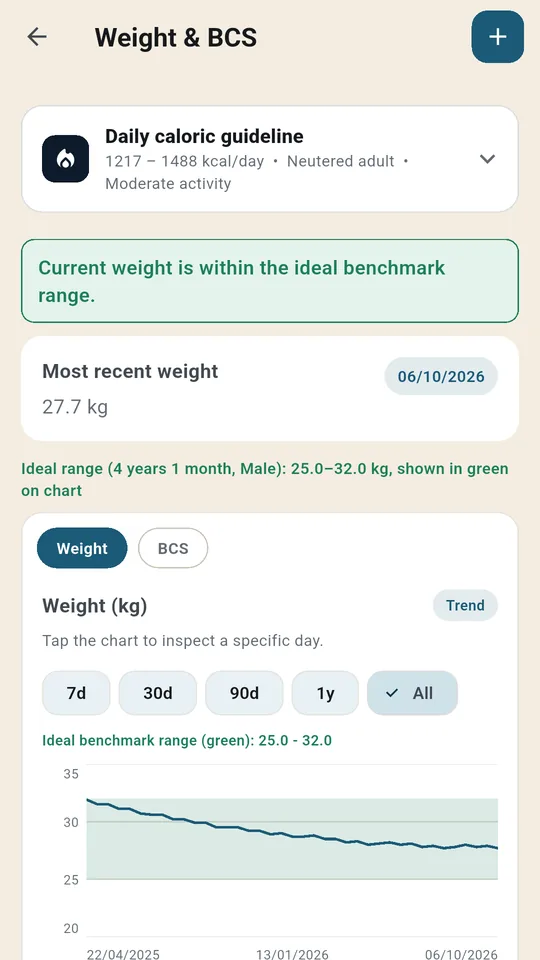
Track skin, weight, behaviour, medication, routines and vet costs with the Bull Terrier Buddy app.
Meet the app

Check
Four free, breed-specific checks. Each answers one question properly and links to the guide behind the answer. No sign-up.
View all toolsTrack
Skin, weight and behaviour problems in Bull Terriers rarely arrive overnight. They build over weeks, while you switch the food, try a new shampoo or start a supplement. By the vet appointment, nobody remembers exactly what changed, or when.
Bull Terrier Buddy keeps that record as it happens: skin flare-ups, weight, behaviour, medication, routines and vet costs, ready to export as a report for your vet.

Popular guides
Learn

He will tell you he is starving. All that muscle hides the weight he is putting on.

The scratching that keeps you both awake. Usually one of seven causes.

He heard you. He is considering it. That is the breed, not your training.

The breeder decides most of the health risk before you even meet him.

What he needs, and why he keeps getting mistaken for a Staffy.
With the right household they are wonderful, and they are not a low-effort dog. They are affectionate to the point of clingy, very funny, and completely devoted to their people. They are also strong, boisterous, stubborn and incapable of settling themselves down. They need consistent training, real daily exercise and something to think about, and early socialisation matters more here than in most breeds.
Most adults weigh 22-32 kg (50-70 lb) and stand 53-56 cm (21-22 in) at the withers. Miniature Bull Terriers are 8-13 kg (18-28 lb). Those are ranges rather than targets, and frame size varies enough that body condition assessed by hand is far more reliable than the scales.
The four worth understanding before you buy are congenital deafness, hereditary nephritis and polycystic kidney disease, atopic skin disease, and compulsive tail chasing. Ask any breeder for BAER hearing certificates for the litter and kidney screening for both parents, and ask directly about compulsive behaviour in the line.
The four commonest causes in this breed are environmental allergy, an adverse food reaction, flea-bite hypersensitivity, and contact irritation. Where he is itching separates them: the base of the tail points at fleas, the face and ears at atopy or food, the belly and pads at contact irritation.
Usually 10 to 14 years. What most affects where a dog lands in that range is kidney health, keeping him at a sensible body condition, and skin disease being properly managed rather than endured.
Because living with one is unlike living with any other dog. They are comedians with a stubborn streak, they lean on you rather than sit beside you, they grumble conversationally, and they are convinced they are human. Most owners never go back to another breed.


